LuxREST project
1 / 41

LuxREST dissertation presentation

Scroll to read. Large scientific figures can be inspected by swiping them horizontally.

Dissertation defense

LuxRest

Ramyar Tajik · Drexel UniversityLuxRest
Field Feasibility of a Personal Circadian-Supportive Light Measure-to-Action System
Doctor of Philosophy
Advisor · Simi Hoque
PersonallightLuxRestInformationEveryday use
Dissertation, title and abstract · 2 October 20261 / 41

The central contribution

LuxRest connects personal light sensing with participant-facing information

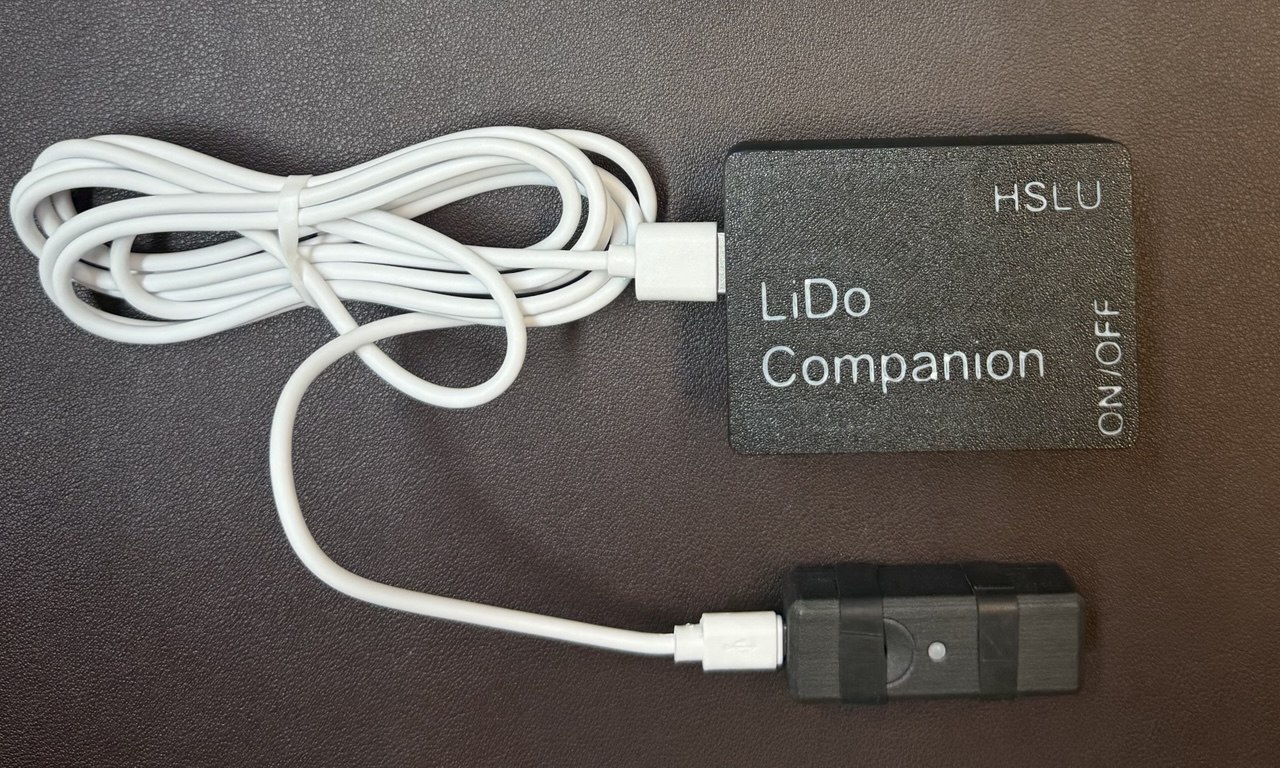
Actual LiDo and connected companion apparatus

Implemented apparatus · LiDo and cabled companion

Measure near the eyesTime-resolved melanopic equivalent daylight illuminance
Make the record accessibleParticipant-specific visualization and communication
Evaluate the deployed pathwayTechnical, participant, and analytical evidence
Dissertation, Chapters 4–6 · 2 October 20262 / 41

Thesis contribution

The platform is the research artifact; deployment produces scientific knowledge

01

Artifact

A connected near-corneal measurement-to-information architecture

02

Empirical evidence

Field realization, access, interaction, perceived value, and design needs

03

Research method

Source-linked records and interval-aware exposure construction

Developmental question: how can personal light become an operational, evaluable information system?

Scientific problem

A building provides light. A person receives exposure.

Environmental provisionDaylight and electric lightSpatial lighting conditionsOccupant contextLocation · gaze · movementSchedule and controlPersonal exposureNear-eye light over timeThe measurement plane and the lived exposure are different

Scientific foundation

mEDI and timing give personal light its circadian-relevant context

A standardized optical quantitymEDI is the D65 illuminance producing equivalent melanopic irradiance.
A time-structured exposureIntensity, spectrum, duration, and timing inform interpretation.
A proximal measurementA spectacle-mounted sensor follows light conditions near the eyes.
≥250lx mEDI · daytime reference
≤10lx mEDI · ≥3 hours before bedtime
≤1lx mEDI · sleep environment

Consensus guidance for healthy, day-active adults

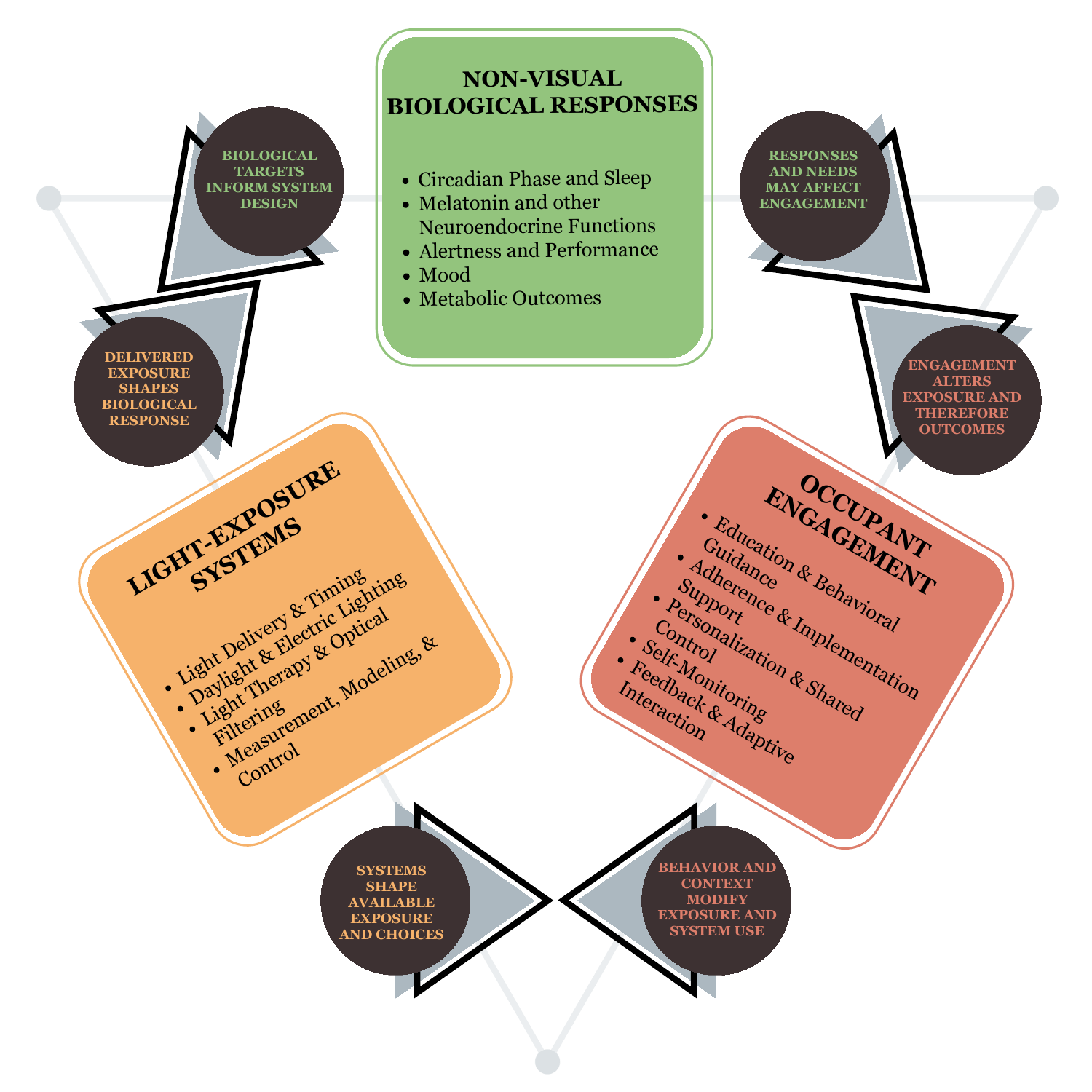
TRIAD · evidence for integration
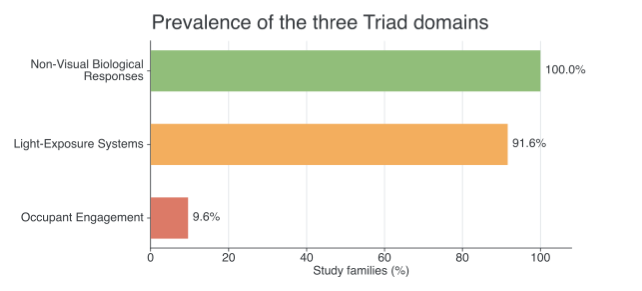
The evidence map locates the opportunity for a participant-in-the-loop platform

Original TRIAD manuscript Figure 3: Non-Visual Biological Responses 100.0%, Light-Exposure Systems 91.6%, Occupant Engagement 9.6%

TRIAD manuscript · original Figure 3

647qualified publications583study families
534 families included exposure systems56 included qualifying occupant engagement.
Near-eye measurement with engagement6 of 56 families; 1 of 56 reported mEDI.

Evidence → engineering

Four requirements organize LuxRest’s design decisions

1 · Personal exposureNear-corneal sensing follows the personacross changing environments.2 · Temporal interpretationTime-resolved mEDI and reference cuesmake the record interpretable.3 · Traceable transportLocal receipt and derivative recordsmake the pathway recoverable.4 · Accessible interactionDashboard, scheduled messages, and questionsreturn information while preserving choice.
Dissertation, §4.2; Table 4.1 · 2 October 20267 / 41

Research lineage

Creation, demonstration, and evaluation form a defensible scientific account

Interpretive research framing

ProblemObjectivesBuildDemonstrateEvaluateCommunicateTRIAD + measure-to-action gapArtifact + verified field realizationLinked deployment evidence

Design science explains the artifact contribution.
NIH Stage I situates development, refinement, and pilot testing.

Study questions

Five aims connect the artifact to its field evidence

01
System realization
What was implemented and deployed?
02
Pilot feasibility and implementation
What supports the next evaluation?
03
Participant experience
How were helpfulness, satisfaction, and burden experienced?
04
Preliminary personal-light outcomes
What phase-associated differences were observed?
05
Supporting exploratory evidence
What do process and context reveal?
Dissertation, Table 1.1; §3.1 · 2 October 20269 / 41

LuxRest · physical system

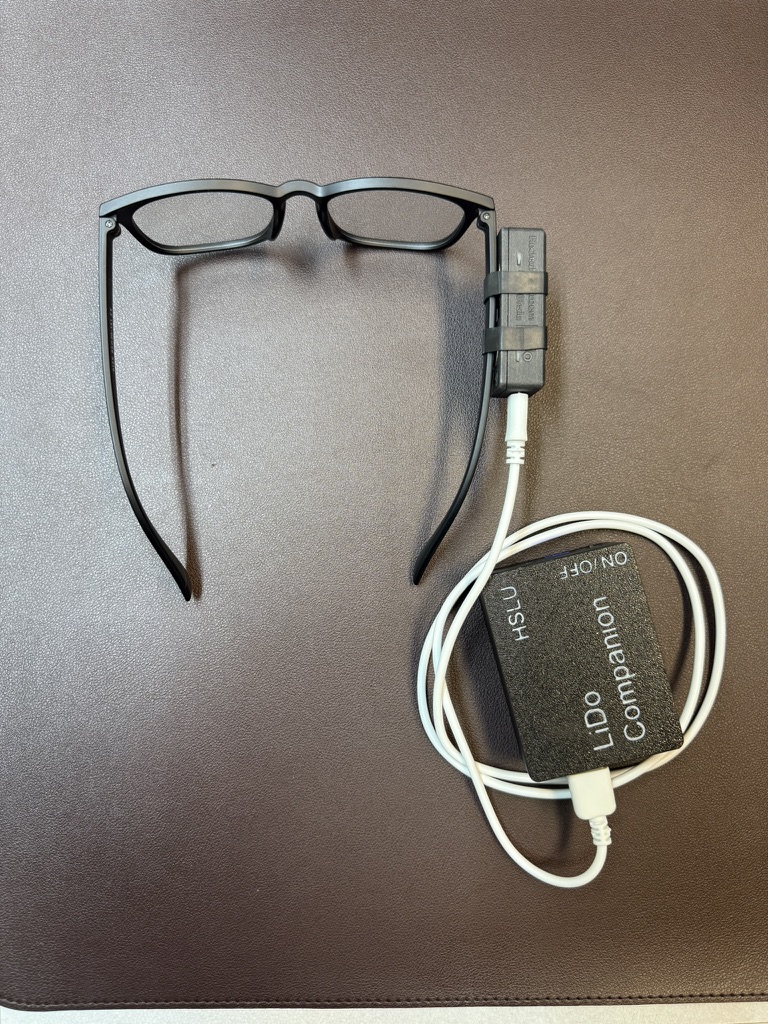
The mounted sensor and companion form the physical system

Original project photograph of LiDo mounted on glasses and connected by USB to its companion
Measure near the eyesThe dosimeter is mounted beside a spectacle lens.
Connect to the companionThe USB connection links the sensor and acquisition bridge.
Wireless transmissionThe companion supports Wi-Fi / MQTT transmission.

Original project photograph
Mounted LiDo, USB cable, and companion

Dissertation, §4.4–4.5 · 2 October 2026; Original hardware photograph · portfolio source archive10 / 41

LuxRest · setup demonstration

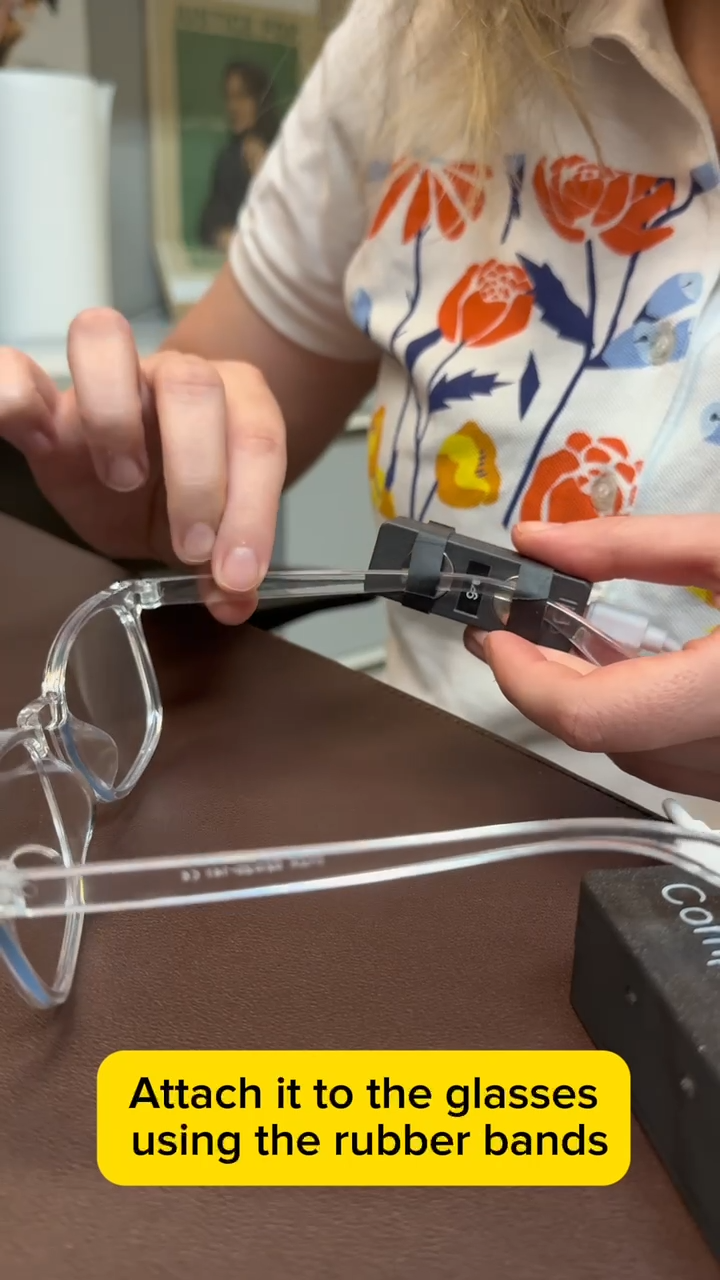
Connecting and mounting the wearable

Setup demonstration: attach LiDo to the spectacle frame

Original instruction video · connection and mounting excerpt
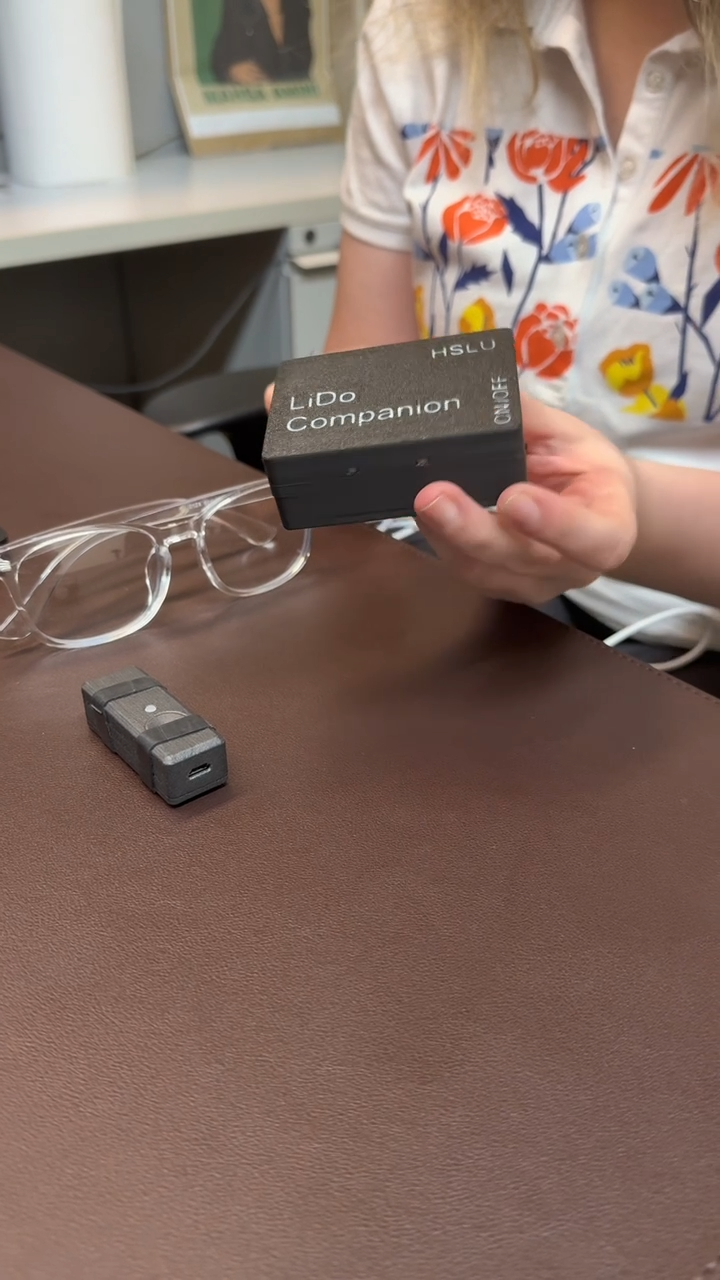
Original setup frame: connect
01

Connect

Sensor and companion joined by USB.

Original setup frame: attach
02

Attach

Sensor secured beside the spectacle lens.
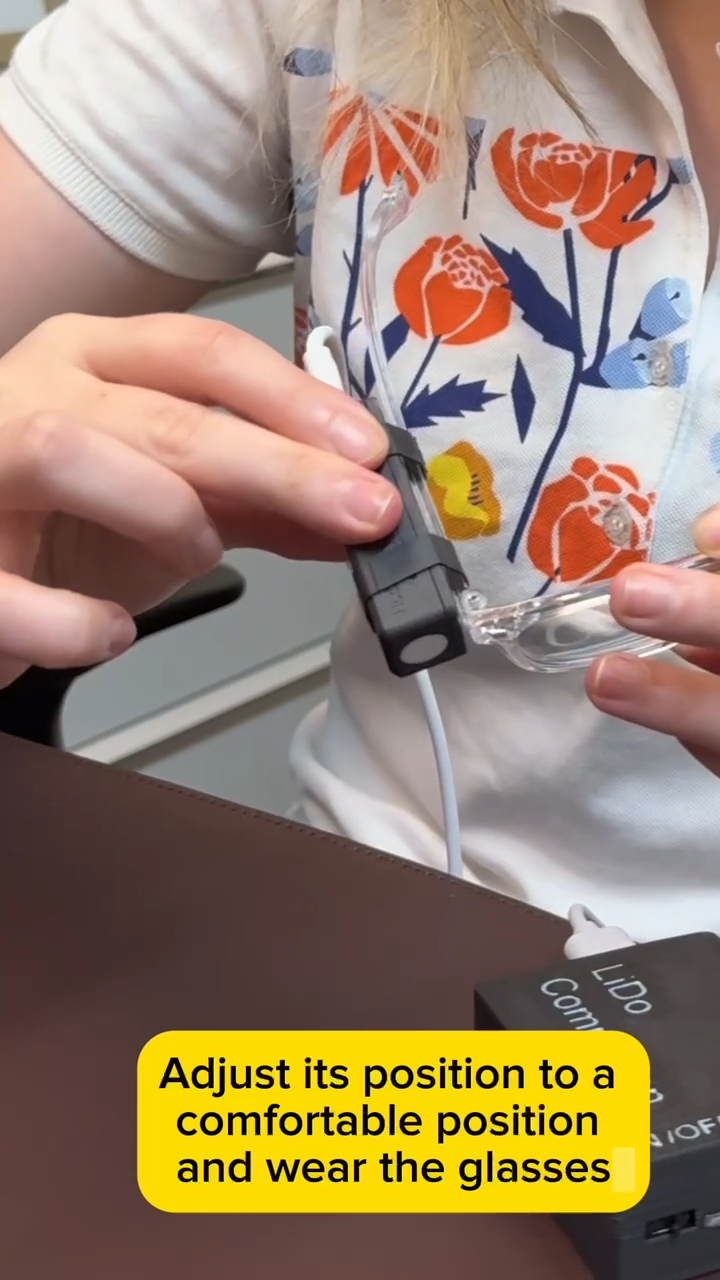
Original setup frame: position
03

Position

Mount adjusted for comfortable wear.

Dissertation, §3.4; §4.4 · 2 October 2026; Supplied LuxRest how-to-wear video · source excerpt 00:04–00:2111 / 41

LuxRest · operating pathway

One pathway connects sensing, backend, and participant-facing services

LiDoNear-cornealmEDICompanionUSB bridgeWi-Fi / MQTTReceiverLocal receiptRaspberry PiCloudBatch routingAssigned streamDashboardOpen / refreshChart + gaugeTelegramScheduledcommunicationConversationQuestion-ledcontext retrievalSENSINGPRESERVATIONINFORMATIONParticipant access → interpretation → possible action

Verified architecture · scroll-controlled schematic

The complete architecture

MeasureLiDo and its companion acquire personal-light records.
Preserve and routeLocal receipt is retained before cloud-mediated handoff.
Return informationDashboard, scheduled communication, and questions form separate branches.
Dissertation, §4.3–4.7 · 2 October 202612 / 41

LuxRest · operating pathway

The sensing edge preserves the optical meaning of the record

LiDoNear-cornealmEDICompanionUSB bridgeWi-Fi / MQTTReceiverLocal receiptRaspberry PiCloudBatch routingAssigned streamDashboardOpen / refreshChart + gaugeTelegramScheduledcommunicationConversationQuestion-ledcontext retrievalSENSINGPRESERVATIONINFORMATIONParticipant access → interpretation → possible action

Verified architecture · scroll-controlled schematic

Implemented function

LiDo supplies mEDIThe principal melanopic channel is present before cloud ingestion.
Companion requests and packages valuesA USB bridge connects the dosimeter to network transmission.
Wi-Fi / MQTT carries the recordOptical measurement and transport have distinct functions.

Optical quantity → acquisition record → network message

Dissertation, §4.4–4.5 · 2 October 202613 / 41

LuxRest · operating pathway

Local preservation makes the pathway recoverable

LiDoNear-cornealmEDICompanionUSB bridgeWi-Fi / MQTTReceiverLocal receiptRaspberry PiCloudBatch routingAssigned streamDashboardOpen / refreshChart + gaugeTelegramScheduledcommunicationConversationQuestion-ledcontext retrievalSENSINGPRESERVATIONINFORMATIONParticipant access → interpretation → possible action

Verified architecture · scroll-controlled schematic

Implemented function

Receipt-level source recordReceived payloads and receipt metadata are preserved locally.
Separate downstream representationA recovered implementation retained alternating successfully formatted records.
A reconstructable transformationSource and routed records support inspection of data movement.

Preservation is part of the research architecture.

Dissertation, §4.5 · 2 October 202614 / 41

LuxRest · operating pathway

Cloud workflows connect batches with the assigned participant context

LiDoNear-cornealmEDICompanionUSB bridgeWi-Fi / MQTTReceiverLocal receiptRaspberry PiCloudBatch routingAssigned streamDashboardOpen / refreshChart + gaugeTelegramScheduledcommunicationConversationQuestion-ledcontext retrievalSENSINGPRESERVATIONINFORMATIONParticipant access → interpretation → possible action

Verified architecture · scroll-controlled schematic

Implemented function

Unpack transferred batchesPrepare interface-oriented observations.
Route the assigned streamConnect deployment, dashboard, and communication context.
Support three servicesVisualization, scheduled communication, and contextual retrieval.
Dissertation, §4.3; §4.5–4.6 · 2 October 202615 / 41

LuxRest · workflow archive

Assigned streams in the workflow implementation

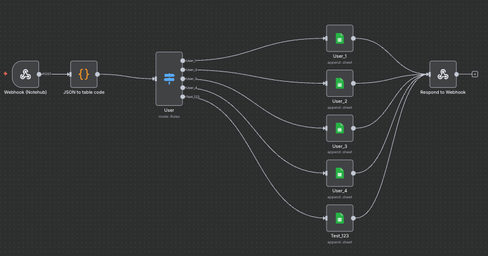
Original archived n8n workflow: webhook, batch unpacking, assigned-route selection, and destination streams

Archived workflow screenshot · October 2025 proposal

Receive and unpackA webhook receives a batch for formatting.
Select the assigned routeRouting connects the record with its destination stream.
Assigned participant contextDashboard and communication use the assigned context.
Dissertation, §4.3; §4.5–4.6 · 2 October 2026; Original embedded image · October 2025 proposal slide 1816 / 41

LuxRest · operating pathway

Synchronization, retrieval, and recent-value display are different operations

LiDoNear-cornealmEDICompanionUSB bridgeWi-Fi / MQTTReceiverLocal receiptRaspberry PiCloudBatch routingAssigned streamDashboardOpen / refreshChart + gaugeTelegramScheduledcommunicationConversationQuestion-ledcontext retrievalSENSINGPRESERVATIONINFORMATIONParticipant access → interpretation → possible action

Verified architecture · scroll-controlled schematic

Information freshness

Cloud handoffConfigured to attempt transfer approximately every 15 minutes.
Dashboard retrievalAssigned data are fetched when the page opens or refreshes.
Recent-value gaugeA timer recalculates the summary from already loaded observations.

Each operation has its own time basis.

Dissertation, §4.5–4.6 · 2 October 202617 / 41

LuxRest · participant interface

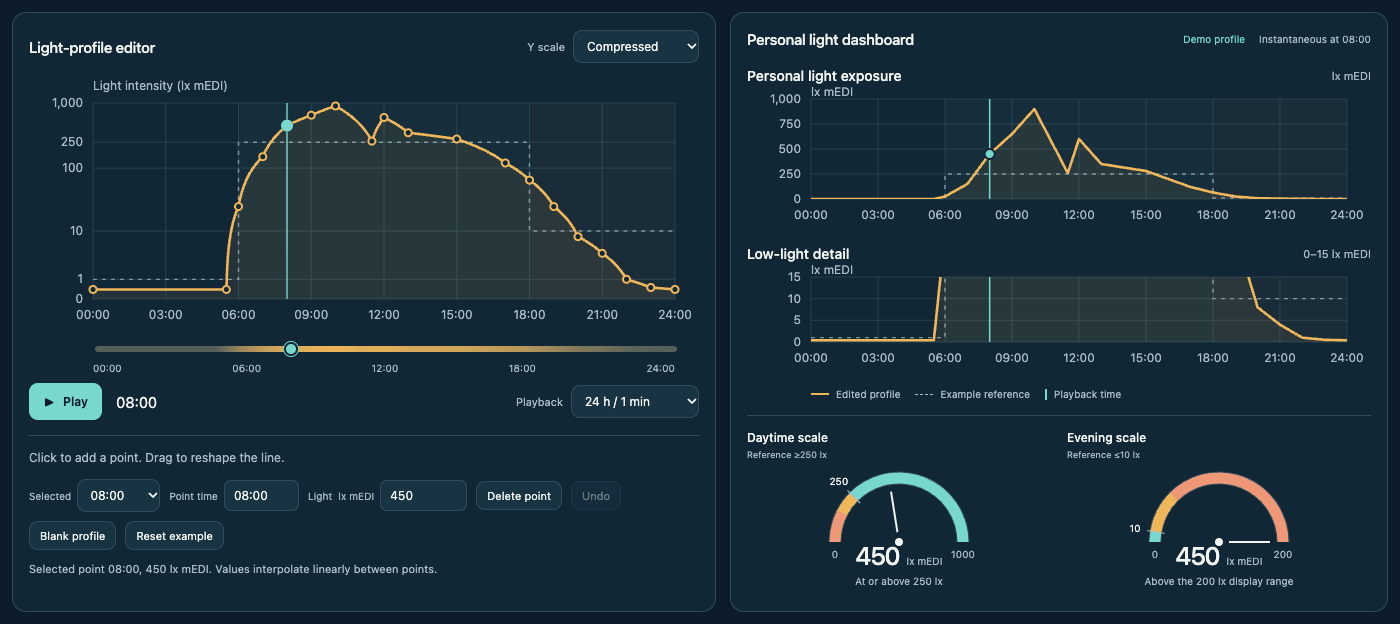
Explore the personal-light pathway with Observatory

Observatory: editable 24-hour light profile, playback ribbon, full-day and low-light charts, and instantaneous gaugesOBSERVATORY · EDITABLE DEMO PROFILE

MEASUREMENT → VISIBLE INFORMATION

01

Shape a full day

Add and move points on a 24-hour mEDI profile.

02

Move through time

Play or scrub the ribbon to read instantaneous values.

03

Explore the same profile

Full-range and low-light views support complementary readings.

Local interactive presentation tool

Dissertation §4.6 · 2 October 2026; Observatory design selected by Ramyar · 3 October 2026; Interactive demonstration · editable synthetic profile18 / 41

LuxRest · chart walkthrough

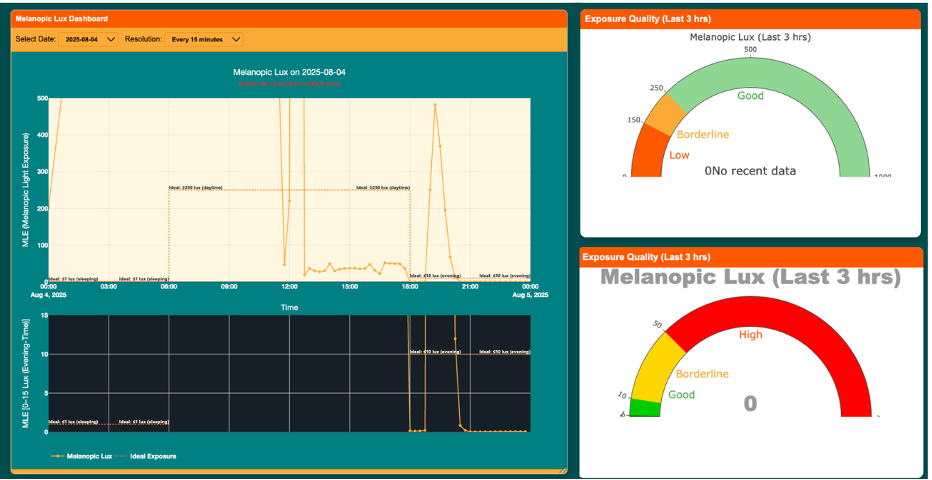
The chart turns loaded observations into a selectable daily view

Melanopic light

4 August 2025 · every 15 minutes

Personal light exposure

0–500 lx mEDI
010020030040050000:0003:0006:0009:0012:0015:0018:0021:0024:00

Evening detail

0–15 lx mEDI
05101500:0003:0006:0009:0012:0015:0018:0021:0024:00
Melanopic light Reference exposure
Choose a date and resolutionLoaded observations are grouped into display bins.
Read the daily patternTime and reference cues place the record in context.
Inspect the evening rangeA separate low-light view enlarges the evening detail.

Presentation redraw · original plotted trace preserved

Dissertation, §4.6 · 2 October 2026; Recovered page code · groupByResolution / updateChart19 / 41

LuxRest · recent-value walkthrough

The gauge summarizes recent loaded values and represents availability

Recent exposure

Melanopic light · last 3 hours

015025050010000No recent dataLow · Borderline · Good
Low
0–150
Borderline
150–250
Good
250–1000
Select the recent three hoursFilter observations already loaded in the browser.
Compute an arithmetic meanSum selected mEDI values and divide by their count.
Represent recent availabilityThe source display shows no recent data.

Presentation redraw · source gauge ranges and no-recent-data state

Dissertation, §4.6; §3.6 · 2 October 2026; Recovered page code · drawLiveGauge20 / 41

LuxRest · operating pathway

Telegram supplies scheduled communication and on-demand conversation

LiDoNear-cornealmEDICompanionUSB bridgeWi-Fi / MQTTReceiverLocal receiptRaspberry PiCloudBatch routingAssigned streamDashboardOpen / refreshChart + gaugeTelegramScheduledcommunicationConversationQuestion-ledcontext retrievalSENSINGPRESERVATIONINFORMATIONParticipant access → interpretation → possible action

Verified architecture · scroll-controlled schematic

Implemented function

Scheduled pathwayStudy communication, survey reminders, and feedback resources.
Participant-initiated pathwayA question triggers contextual retrieval and a response.
Human decisionParticipants choose whether to ask, interpret, and act.
Dissertation, §4.6; Figure 4.3 · 2 October 202621 / 41

LuxRest · interactive communication

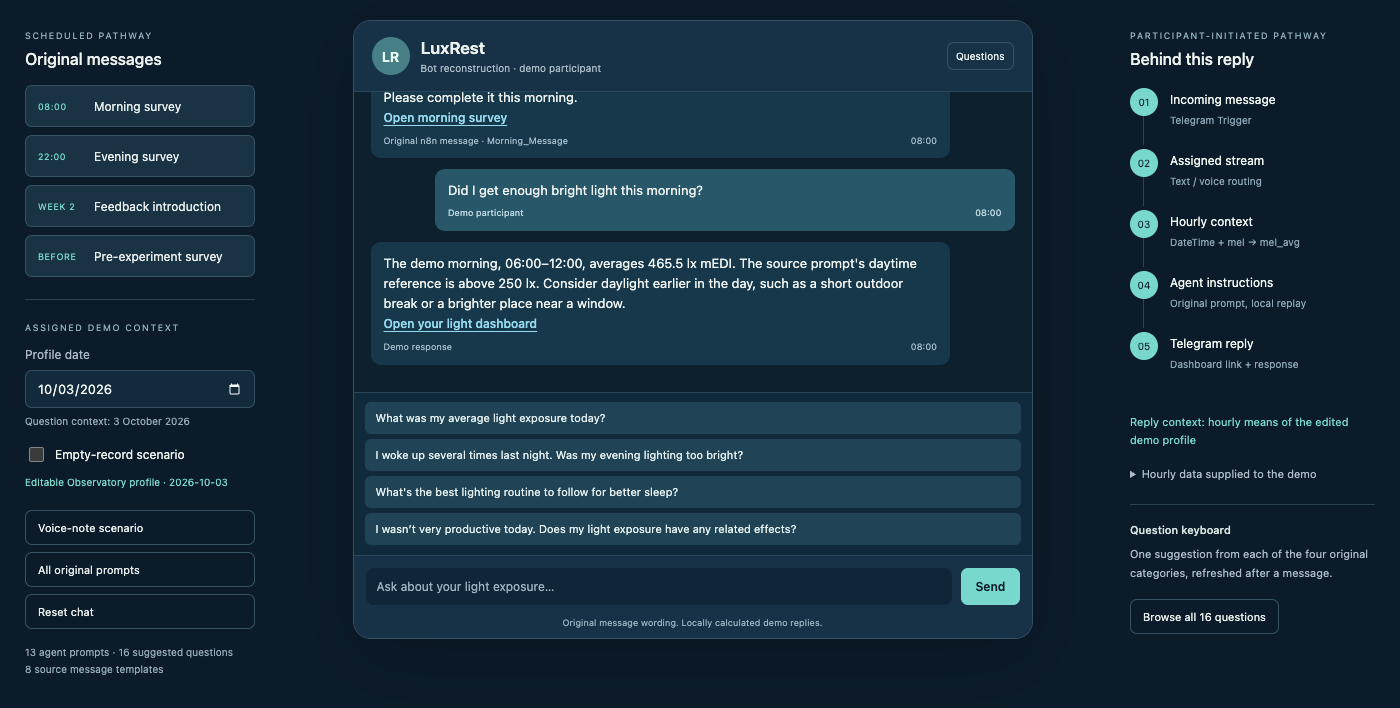
Explore the scheduled and question-led Telegram pathways

Telegram reconstruction: original scheduled messages, rotating suggested questions, editable demo context, and animated context-to-reply pathwayORIGINAL N8N CONTENT · LOCAL INTERACTION

INFORMATION → PARTICIPANT ENGAGEMENT

01

Scheduled contact

Replay morning, evening, and feedback-introduction messages.

02

Question-led exploration

Type a question or use the original rotating keyboard.

03

Trace the reply

See assigned hourly context, original agent prompts, and the dashboard link.

16 questions · 13 archived agent prompts · 8 message templates

Dissertation §4.6 · 2 October 2026; Original n8n exports · Methodology / LuxRest Backend Workflow; Source-based offline reconstruction · demo participant and editable profile22 / 41

LuxRest · contextual response

A participant question activates a context-to-response workflow

QuestionParticipant initiatesa light-related request.Assigned contextRetrieve relevant storedpersonal-light information.Response creationSummarize contextand generate a reply.Telegram replyReturn informationfor participant review.Question-led conversation complements visual and scheduled information.
Dissertation, §4.6; Table 4.2; Figure 4.3 · 2 October 202623 / 41

LuxRest · participant journey

The person remains in the loop across measurement, review, and possible action

WearEncounter everydaylight environments.ReviewOpen the assigneddashboard.AskSeek contextualinformation if useful.ChooseConsider feasiblelight-related actions.Buildings supply opportunities; information supports the participant’s own decisions.
Dissertation, §4.1–4.2; §4.6; §6.2 · 2 October 202624 / 41

LuxRest · operating pathway

Each stage produces evidence for a different evaluation question

LiDoNear-cornealmEDICompanionUSB bridgeWi-Fi / MQTTReceiverLocal receiptRaspberry PiCloudBatch routingAssigned streamDashboardOpen / refreshChart + gaugeTelegramScheduledcommunicationConversationQuestion-ledcontext retrievalSENSINGPRESERVATIONINFORMATIONParticipant access → interpretation → possible action

Verified architecture · scroll-controlled schematic

Artifact → evidence

What was received and routed?Payloads, derivative streams, and interface-oriented records.
What was accessed or communicated?Dashboard summaries and attributable Telegram entries.
What did participants experience?Post-study ratings and source-linked open responses.
Dissertation, §4.5–4.10; §5.3–5.5 · 2 October 202625 / 41

LuxRest · engineering knowledge

Design choices become transferable research requirements

Implemented choiceScientific valueTransferable requirement
Local source preservationRecover transformations across technical hopsRetain source-level evidence
Assigned stream + separate servicesLink functions with the correct evidenceTrack routing and intervention state
Time-resolved optical recordsDefine interpretable temporal questionsAlign clocks, windows, and observation
Visual and conversational interfacesEvaluate information use in daily lifeMeasure access, experience, and action distinctly
Dissertation, §4.10; §6.2; §7.2–7.4 · 2 October 202626 / 41

Field protocol

Passive monitoring preceded access to feedback

BaselinePassive light monitoringMorning and evening surveysActivationFeedback introducedTransition dayFeedbackPersonal information availableMonitoring and daily surveysPre-study surveyPost-study surveyEvery completer followed baseline before feedback
Dissertation, §3.4 · 2 October 202627 / 41

Field calendar

The field calendar spans June–September 2025

Philadelphia · median field interval 16 days · baseline median 8.5 days · feedback median 7 days
JulAugSepP01P02P03P04P05P06P07P08P09P10P11P12P13P14BaselineActivationFeedback
Dissertation, §5.2; Figure 5.1 · 2 October 2026; Verified participant timeline, v228 / 41

Field realization

The deployed platform generated a source-linked field corpus

14/18
completed operational records
255
official completer participant-days
234,614completer source observations
→
218,708retained after temporal and quality rules
→
93.2%of completer source observations retained

LiDo sources: 237,991 observations across 15 operational records · recorded measurements

Dissertation, §5.2–5.3; Tables 5.1–5.2 · 2 October 202629 / 41

Information access and communication

Recorded access and interaction corroborate the participant-facing pathway

156

attributable dashboard views

13 tracked completers
Median 10 views · range 2–24

Access summaries

14/14

completers with attributable Telegram records

98participant-originated entries492system- or researcher-originated entries
Dissertation, §5.4; Table 5.2 · 2 October 202630 / 41

Participant experience

Participants valued the personal-light information

Very or extremely helpful11/14Satisfied or very satisfied12/14Would participate again12/14Reported light-related changes11/14Selected increased awarenessas most beneficial9/14014completers (n = 14)
Dissertation, Table 5.3 · post-study completer responses · 2 October 202631 / 41

Participant-informed design

Favorable evaluations and concrete experiences guide refinement

5/14
reported a challenge

Eligible open responses contribute design insight alongside the closed-item findings.

9 meaningful excerpts · 5 respondents

Comfort and equipment handling
Charging and planning
Fit with daily schedules
Clearer mobile navigation
Dissertation, §5.11; post-study qualitative codebook · 2 October 202632 / 41

Analytical method

Observed intervals preserve the meaning of wearable data

WORKED EXAMPLE · aggregated valid intervals, schematic valuesObserved time and excluded gap≥250 lx mEDI30 observed min<250 lx mEDI30 observed minUnobserved gapNo duration contributedRecorded zero30 observed min60 × 30 / 90 = 20 min ≥250 lx mEDI per observed hour
Dissertation, §3.5; §3.6.2 · 2 October 202633 / 41

Exposure definitions

H1 and H2 use different windows and favorable directions

H1 · Daytime

≥250 lx mEDI

Wake to 3 hours before attempted bedtime

Higher minutes per observed hour are favorable

≥25% coverage and ≥3 observed hours

H2 · Pre-bedtime

>10 lx mEDI

The 3 hours before attempted bedtime

Lower minutes per observed hour are favorable

≥60 observed minutes

60 ×observed threshold durationvalid observed durationminutes per
observed hour

Principal gap cap: 120 seconds · eligible occasions averaged within participant and phase

Seasonal context

Daylight opportunity shortened across every completer’s phases

P01-9.7P02-4.0P03-10.3P04-12.2P05-18.1P06-16.8P07-43.1P08-21.6P09-15.8P10-23.1P11-19.9P12-20.4P13-31.3P14-31.30-10-20-30-40Feedback − baseline photoperiod (minutes)
−19.83
minutes of photoperiod
feedback minus baseline

All 14 completers had a shorter mean astronomical day during feedback.

Baseline 841.70 min
Feedback 821.87 min
Official complete phase calendars

Dissertation, §5.7 · official-calendar analysis · 2 October 2026; seasonality_participant_full_protocol.csv35 / 41

From field evidence to knowledge

The pilot links platform realization with concrete development priorities

EvidenceKnowledge gainedDevelopment priority
Architecture + retained recordsThe measurement-to-information pathway can operate in field use.Versioned, observable deployment
Access + helpfulness + satisfactionParticipants encountered and valued information functions.Preserve valued functions; improve usability
Open-text design needsHandling, routines, and navigation shape use.Lighter equipment and clearer mobile interaction
Temporal and observation methodsResearch questions require explicit windows and usable observation.Prospective observation and outcome planning
Dissertation, §6.1–6.3; §6.8; Chapter 7 · 2 October 202636 / 41

Discussion

Interpretation follows the achieved field design

The pilot connects engineering realization, participant experience, and phase-associated personal-light evidence.

Its developmental role is to establish the platform and define a stronger next evaluation.

Fixed phase orderCalendar conditions and time in study accompany feedback onset
Participant-selected observationExposure estimates describe recorded wear
Outcome-specific populationsEach question requires its own valid evidence
Distinct process and experience measuresAccess, helpfulness, and exposure answer different questions
Dissertation, §6.7 · existing scientific limitations · 2 October 202637 / 41

Next evaluation

A staged program turns the field evidence into testable improvements

01

Characterize measurement and the route

Recording state, timestamps, reference comparisons, and versioned deployment

02

Refine field use

Lighter assembly, schedule-relative feedback, comprehension tasks, and usable coverage

03

Evaluate controlled exposure

Randomized activation, distributed calendar conditions, and prospectively defined outcomes

Dissertation, Chapter 7 · 2 October 202638 / 41

Future research extension

Circadian phase could inform when personal-light feedback is offered

Personal light historyNear-corneal mEDIDaily scheduleEstimated phasePhysiological / wearablestate informationTiming guidanceFeasible light actionsEnvironmental opportunityProspective evaluationPhase estimates, understanding,action, and personal exposure2026 research motivates a phase-informed extensionXu et al. preprint: ingestible CBT reference · 14 participants · 8-hour history · 1.19-hour CMAE

Dissertation synthesis

LuxRest makes personal-light information an operational building-research object

A verified pathway from near-corneal measurement to participant-facing information.

ScientificTRIAD identifies the integration opportunity.
EngineeringLuxRest realizes sensing, provenance, visualization, and communication.
Empirical and methodologicalField evidence and explicit observation methods guide the next evaluation.
LuxRestMeasure
Inform
Evaluate
Dissertation, Chapter 8; §4.10; §6.9 · 2 October 202640 / 41

Questions

Thank you

LuxRest

Personal light.
Interpretable information.
An evaluable research pathway.

Ramyar Tajik · Drexel University
Advisor · Simi Hoque

?
41 / 41

Scientific backup

Aims and evidence units

AimResearch questionPrincipal evidence
System realizationHow were requirements operationalized, and what was deployed?Technical and operational artifacts
Feasibility and implementationWhat supports a larger evaluation?Retention, availability, fidelity, engagement, traceability
Participant experienceHow was LuxRest experienced?Helpfulness, satisfaction, awareness, burden
Personal-light outcomesWhat phase-associated differences were observed?Eligible participant-days and participant-nights
Exploratory evidenceWhat do process, heterogeneity, and context reveal?Events, timing, daily measures, environment, convergence
Dissertation, Table 1.1; §3.1 · 2 October 2026Backup 1 / 26

Scientific backup

TRIAD source verification and reporting units

684 publicationsFinal source-level verification set
665 complete reports obtained37 publications excluded after source verification
647 qualified publications628 complete reports reviewed · 97.1%
583
study families

Family linkage consolidates multiple publications from a related study or sample.

Publication counts describe the corpus.
Family counts describe substantive research coverage.

Scientific backup

TRIAD domain definitions

DomainOperational scope
Non-Visual Biological ResponsesQualifying biological or functional response to light in applied human research
Light-Exposure SystemsMethods or technologies that deliver, characterize, or manage light exposure
Occupant EngagementEvaluated active mechanisms such as guidance, adherence support, education, self-monitoring, or shared control

Biological-response eligibility defines the mapped literature. Engagement requires an active evaluated mechanism.

Scientific backup

The engagement pattern persists across reporting assumptions

Study-family main analysis9.6%Publication-level analysis9.7%Complete-report family subset9.9%Conservative unavailable-report bound12.9%015qualifying engagement (%)

Counts: 56/583 families · 63/647 publications · 56/564 complete-report families · 75/583 families

Scientific backup

Published characterization supports the LiDo measurement basis

Stampfli et al. (2023)Device calibration procedure, reference comparisons, spectral and geometric assessment
Stefani et al. (2024)Near-corneal field measurement, wear, usability, and acceptance
Spitschan et al. (2022)V3: verification, analytical validation, clinical validation in the intended context of use

Published platform evidence supports the selection of LiDo for time-resolved personal-light measurement.

Scientific backup

The implemented dashboard has distinct timing domains

FunctionImplemented behavior
Upstream transferPeriodic handoff configured approximately every 15 minutes
Stream retrievalDashboard open or page refresh
Recent-value gaugeArithmetic mean of loaded values in the recent 3-hour period
Reference cues1 lx midnight–06:00 · 250 lx 06:00–18:00 · 10 lx 18:00–midnight
Study indicatorsInterval-weighted rates in participant-specific behavioral windows
Dissertation, §§4.5–4.6 · 2 October 2026; Deployed dashboard source, verified function summaryBackup 6 / 26

Scientific backup

Raw observations become an equal-participant estimand

01

Valid observed intervals

Resolve time, exclude invalid values and conflicts, reduce exact duplicates, clip to the window, apply gap cap

02

Participant-phase mean

Construct eligible days or nights and average their threshold-duration rates within each phase

03

Paired phase contrast

Average feedback − baseline differences with equal participant weight

10,000 participant-bootstrap replicates · exact paired sign permutation · Holm adjustment across H1 and H2

Dissertation, §§3.5–3.6.2 · 2 October 2026Backup 7 / 26

Scientific backup

Behavioral time follows the intended local sleep schedule

WORKED LOCAL-TIME EXAMPLE · reported attempted bedtime 23:1520:1523:15H2 · three hours before attempted bedtimePhiladelphia local time · America/New_YorkSurvey response instant, reported clock time, and behavioral date retain distinct roles
Dissertation, §3.5; morning survey item Q3 · 2 October 2026Backup 8 / 26

Scientific backup

Sensitivity analyses examine the temporal and observation choices

Analytical choiceH1 · daytimeH2 · pre-bedtime
Gap cap60 / 120 / 300 seconds60 / 120 / 300 seconds
Observed duration1- and 3-hour minima30- and 60-minute minima
Coverage or threshold20% / 25% / 50% coverageAbove 10 / above 15 lx mEDI
Temporal definitionBehavioral window, photoperiod, intersectionAttempted bedtime and transition assignment
Anchor and influenceDuplicate-response choice; leave-one-participant-outDuplicate-response choice; leave-one-participant-out
Dissertation, §3.7 · 2 October 2026Backup 9 / 26

Scientific backup

Confidence intervals and design sensitivity answer different questions

Uncertainty

A 95% confidence interval describes uncertainty around the observed phase contrast.

Participant bootstrap under the specified estimator

Planning

A paired-t benchmark relates a target effect to paired variability, eligible sample size, power, and alpha.

A separate model for planning the next evaluation

Dissertation, §3.6.2; §5.6 · 2 October 2026Backup 10 / 26

Scientific backup

Qualitative evidence adds source-linked design insight

9
meaningful excerpts
5
post-study respondents
Directed content analysisInitial categories follow the pilot questions; inductive additions retain participant detail
Inspectable codebookDefinitions, revisions, negative cases, and respondent/item links
Convergence analysisValue, strategies, burden, context, usability, and redesign requests
Dissertation, §3.7; §5.11 · 2 October 2026; Retained de-identified post-study excerpt corpusBackup 11 / 26

Scientific backup

The seasonal analysis uses complete official phase calendars

P01-9.7P02-4.0P03-10.3P04-12.2P05-18.1P06-16.8P07-43.1P08-21.6P09-15.8P10-23.1P11-19.9P12-20.4P13-31.3P14-31.30-10-20-30-40Feedback − baseline photoperiod (minutes)
Completer enrollmentJune: 1 · July: 7 · August: 4 · September: 2
Sunrise to sunsetRepresentative Philadelphia coordinate · America/New_York
Equal participant weightingPhase-average astronomical minutes, then feedback − baseline
Calendar contextDaylight opportunity and measured threshold duration use different units
Dissertation, §3.6.3; §5.7 · 2 October 2026; Verified seasonality_full_protocol_days.csvBackup 12 / 26

Scientific backup

The completed work fits an artifact-centered developmental lineage

Original research ambitionPersonal-light feedback, exposure patterns, and downstream outcomes
Achieved dissertation contributionsArtifact, verified deployment, feasibility, participant experience, and analytical methods
Interpretive research frameworksDesign science and NIH Stage I situate creation, refinement, and preliminary evaluation

The documented procedures and achieved field design define what the evaluation establishes.

Scientific backup

Building integration connects opportunities, choices, and exposure

Environmental opportunityDaylight · electric lightingTask, comfort, energy, controlOccupant decisionsSchedule, position, preferenceAvailable and acceptable actionsPersonal exposureNear-eye light historyTemporal context and coverageProposed joint evaluation in a defined building setting

Scientific backup

LuxRest connects established strands of lighting research

Prior researchVerified contributionLuxRest connection
Peeters et al. (2020)Operational-office study of provided light and variable personal exposureParticipant-facing information attached to the personal exposure record
Gerhardsson & Laike (2021)Wearable trial and apartment demonstration assessing home-lighting acceptanceMulti-day experience with an implemented sensing and information system
Papatsimpa & Linnartz (2020)Model-based optimization of personalized office-light schedulesA field-realized pathway for future model-informed feedback testing

Scientific backup

Two 2026 studies motivate phase-informed feedback research

StudyInputs and referenceReported research finding
Xu et al. (2026)
arXiv preprint v1
Wearable light and activity; ingestible-temperature cosinor phase reference14 participants · 8-hour history · 1.19-hour circular mean absolute error
Matsumoto et al. (2026)
Sensors 26, 5703
Wearable heat-flux temperature, wrist mEDI/activity, lifelog, capsule comparator10 adults · temperature-marker mean absolute difference 27.1 ±16.6 minutes

Future question: how can phase and sleep timing improve the timing of actionable personal-light guidance?

Scientific backup

Participants used LuxRest under an approved field protocol

Philadelphia · June–September 2025Adult Drexel University students in everyday environments
EligibilityAge ≥18, English study procedures, glasses use or willingness to mount the sensor
Screening conditionsSleep, medication, and visual criteria specified in the protocol
Drexel University IRB

2412010902

Approved 26 February 2025

Documented verbal informed consent
Voluntary participation and withdrawal

Dissertation, §3.3 · 2 October 2026Backup 17 / 26

Scientific backup

TRIAD spans multiple exposure and intervention approaches

Electric-lighting intervention179Personal light-exposure monitoring136Light therapy119Daylight exposure101Environmental / room-levelassessment83Lighting control / tunablelighting intervention810200study-family count

Selected multi-label categories · full-map denominator: 583 study families

Communication precedents

SleepTight makes the artifact visible before its detailed evaluation

Eun Kyoung Choe · UW PhD, 2014Designing Self-Monitoring Technology to Promote Data Capture and Reflection
Communication structureEarly interface figure → design goals → backend → deployment → contribution categories
LuxRest adaptationShow authentic apparatus and interface; connect design choices to evidence and knowledge.

Communication precedents

Personal-informatics dissertations make design knowledge explicit

Ian Li · CMU PhD, 2011Personal Informatics and Context
System → mechanism → knowledgeInnertube’s integration approach is explained before implementation and evaluation.
Daniel Epstein · UW PhD, 2018Everyday Personal Informatics
Claim → question → investigationThesis claims map to models, implemented systems, and field evaluations.

LuxRest’s contribution is expressed as a mechanism and a source-linked answer.

Communication precedents

Artifact-centered research has established evaluation vocabularies

Design scienceProblem and objectives → artifact → demonstration → evaluation → communication
HCI contribution typesArtifact, empirical, and methodological knowledge have distinct evaluation criteria.
Developmental intervention researchNIH Stage I and ORBIT distinguish development and pilot work from later efficacy testing.

Source visual backup

Original dashboard source

Unchanged original prototype dashboard screenshot

Original prototype screenshot · 4 August 2025 display · October 2025 proposal

Anonymous original prototype screenshot · proposal slide 19Backup 22 / 26

TRIAD source visual

The Circadian-Supportive Lighting Triad

Original TRIAD manuscript Figure 1 · supplied BAE figure set

Original TRIAD manuscript Figure 1 · supplied BAE figure set

TRIAD source visual
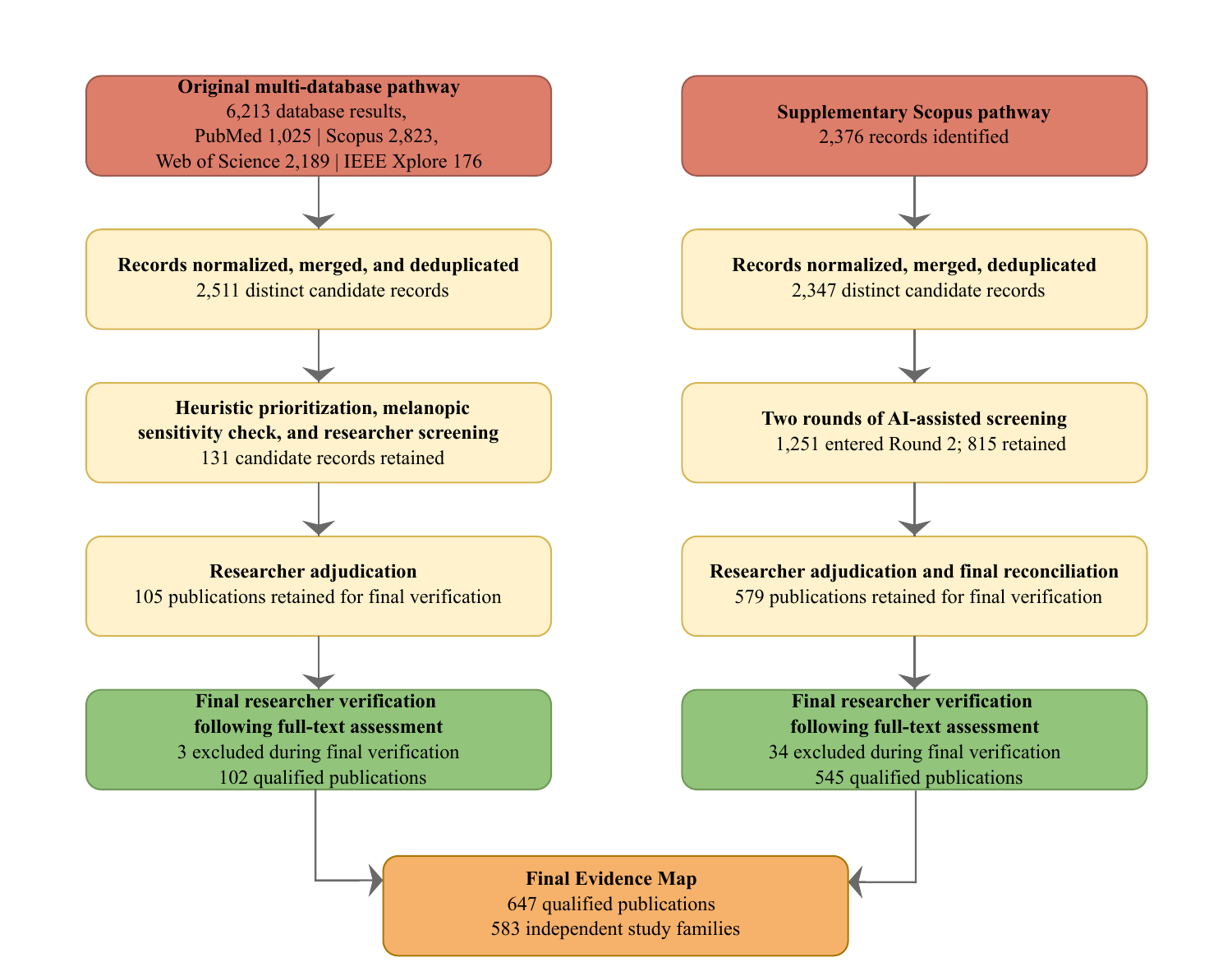
TRIAD screening and source verification

Original TRIAD manuscript Figure 2 · supplied BAE figure set

Original TRIAD manuscript Figure 2 · supplied BAE figure set

TRIAD source visual
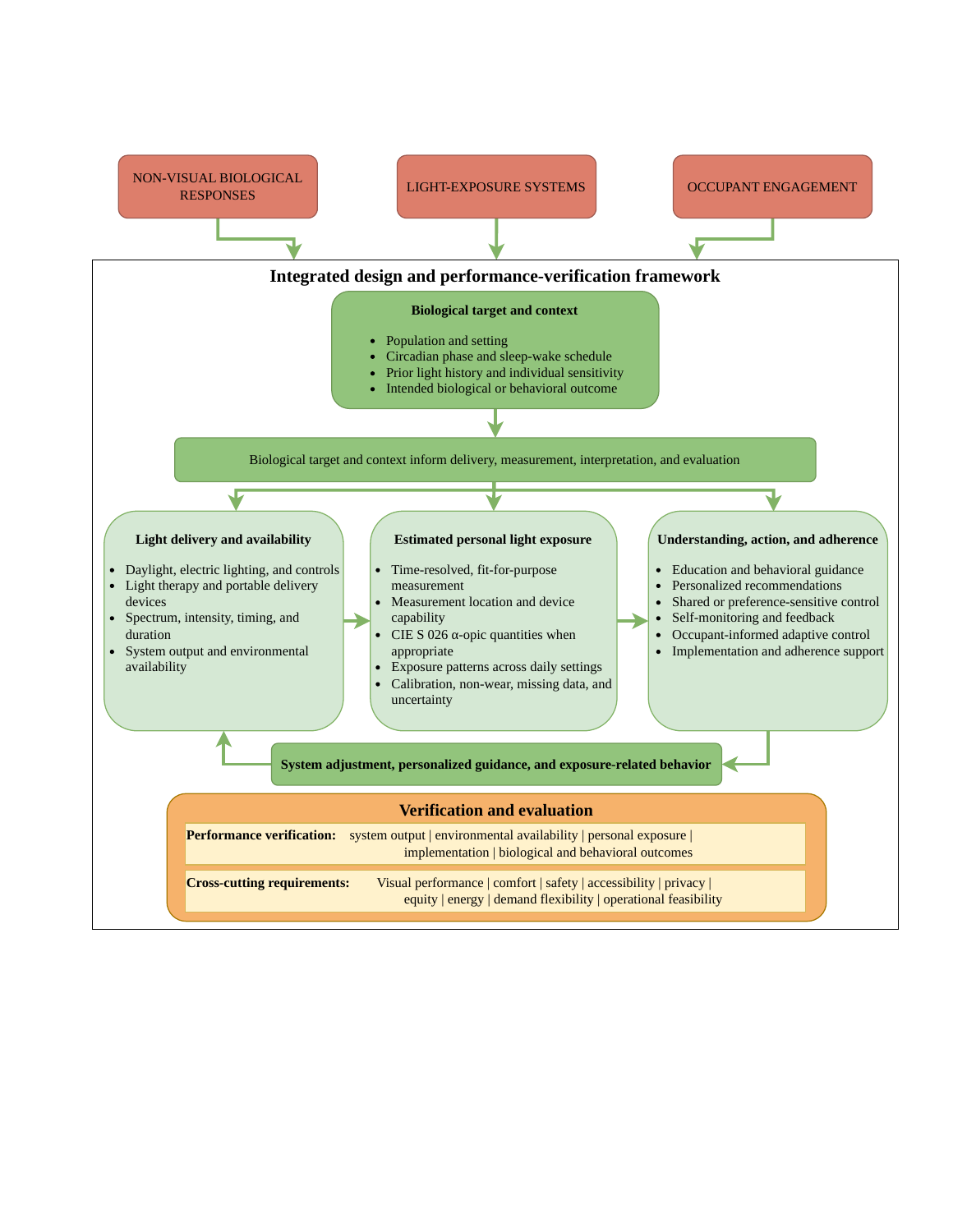
Integrated design and performance verification

Original TRIAD manuscript Figure 8 · supplied BAE figure set

Original TRIAD manuscript Figure 8 · supplied BAE figure set

LuxRest workflow archive
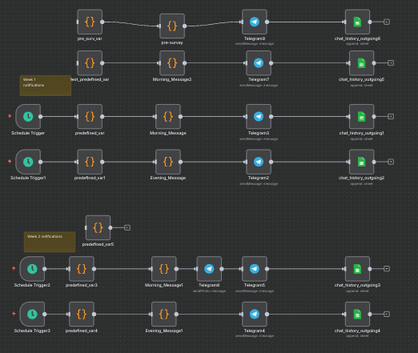
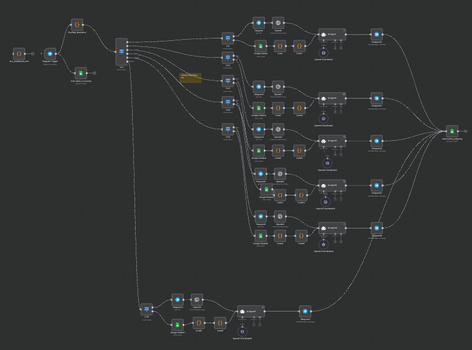
Scheduled communication and question-led workflows
Original archived workflow showing scheduled Telegram messages

Scheduled communication

Original archived workflow showing participant-specific question routing

Question-led context and reply

Original embedded workflow images · October 2025 proposal slide 18

Dissertation, §4.6 · 2 October 2026; Original embedded images · October 2025 proposal slide 18Backup 26 / 26
LuxREST interactive tools

Interactive tool · connected system

Explore LuxREST in action.

Shape a day of light exposure, then follow that same profile into a dashboard and a question-led feedback workflow.

Explore the full system

Try this: raise the evening points, then ask the feedback tool about evening exposure.

The redesigned LuxREST Observatory interface, showing an editable light profile, playback, exposure charts, and instantaneous gauges.

Your light, across the day

One profile. Two connected interfaces.

Add or move points, play the day, and inspect the feedback pathway.

Editable demonstration · synthetic light profile

Editable demonstration using a synthetic profile and source-based messages. Replies are calculated in your browser.

Analytics preferences

Optional Google Analytics uses cookies to measure page visits and engagement. You can browse the entire portfolio with analytics off.

Analytics is off in this browser.

Privacy details. Change your choice here at any time. Your preference is remembered for up to 180 days.